
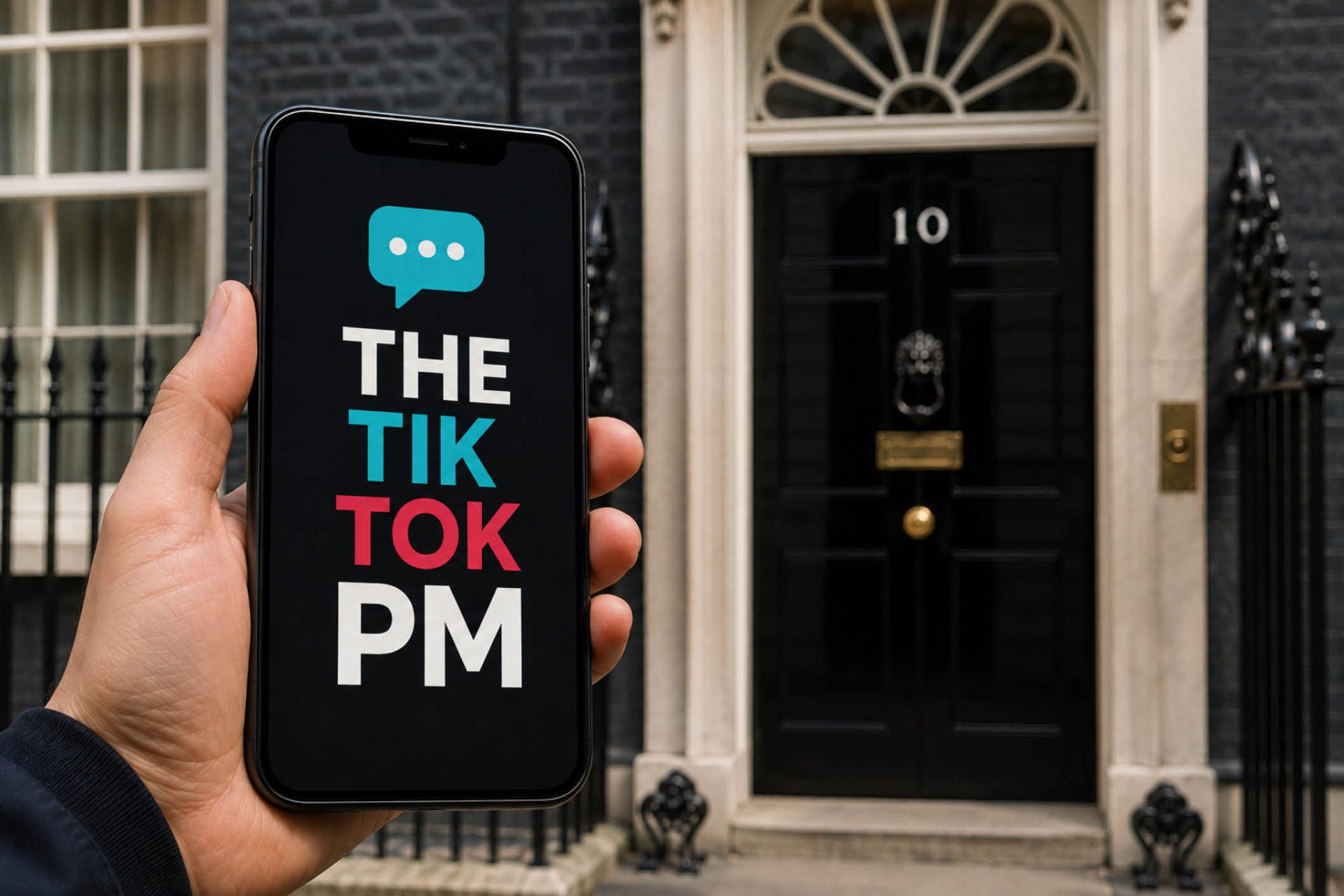
The Tik Tok PM: Andy Burnham’s fresh approach to communication
There’s a new leader in town and, with him, has come an entirely different approach to communication.
Before he became PM, Burnham, dressed in his familiar dark-coloured T-shirt, promised “to do things differently”. And not even a month into the job, it’s clear that this applies to his communication style as much as it does to running the country.
An indication of his fresh approach came with the first speech he gave outside Number 10 upon becoming prime minister. Gone was the traditional lectern and in its place stood Burnham with just two microphones. No notes. No prompts. Nothing separating him from the audience.
It was a simple but clever move. The lack of a physical barrier and ditching of convention served as a visual signifier of the more open, accessible and informal leadership style that he wanted to project.
But it hasn’t stopped there. Our new PM has enthusiastically embraced social media, making it a strategic focus, tapping into online trends and appearing relaxed and comfortable in front of the TikTok camera.
Before becoming prime minister, he was filmed camping out on a chair in the middle of Cardiff, inviting passersby to “ask me anything” about his plans for the UK.
And if he’s not having selfies with Cardiff residents, he’s been seen jogging with Sir Mo Farah, being interviewed up a ladder by Ukrainian internet sensation Max Klymenko, chatting bus fares with Bemi Orojuogun, better known as ‘Bus Aunty’, and blind-ranking pub snacks with the new chancellor. Not bad for a man who’s been in post for just three weeks.
At the time of writing, his TikTok account has amassed around 460,000 followers and while some critics may see this all as a bit “cringe”, much of the early commentary views him as down-to-earth, approachable, warm and authentic. And, importantly, he’s talking to a younger audience on the platforms they hang out on.
No doubt there is a wider political play at work, too. In addition to reaching younger voters, Burnham’s upbeat and inclusive content also challenges that of populist politicians, such as Farage, who have performed well on social media and managed to command attention online.
Of course, it would be naïve to believe that this apparent informality isn’t tightly stage-managed. The content may look spontaneous and unfiltered, but it is still taking place largely on channels controlled by Burnham and his team, where the setting, questions and final edit can all be carefully managed. In that sense, this new style may be no less choreographed than the traditional political communication we’re used to.
And that control becomes even more problematic when it is not balanced by meaningful media scrutiny. Before he stepped through the doors at Number 10, criticism was levelled at him for refusing to take questions from journalists after his first major speech in Manchester. Since then, although he has answered some questions and given a select number of interviews, opportunities for sustained mainstream media scrutiny have remained limited.
These concerns are even more acute because he didn’t set out his stall in a competitive leadership contest and has not yet had his premiership endorsed by the electorate.
As he has stepped up to lead the country, it is understandable that he’s wanted to control the narrative by talking directly to audiences through his own channels, without having the message filtered via the media. And there’s no doubt that it’s been a refreshing change from what we’re used to.
But this approach is unlikely to pass muster much beyond the honeymoon phase of his premiership. There comes a time when a prime minister must speak to the nation as a whole, not just those on social media, and open himself up to questions from journalists whose job, after all, is to hold power to account.
The real measure of Burnham’s communications style will not be how he performs when the climate is favourable and he’s making popular policy announcements, but whether he remains equally visible, direct and available for questioning when announcing unpalatable policy decisions and the response from the public is hostile.
This column appeared in the Western Mail on 7 August 2026 and was written by our Director, Carolyn Pugsley.