
Good Good and Callaway: talkability for all the wrong reasons
An advert promoting a new co-branded golf driver by golf manufacturer, Callaway, and content creator and golf brand, Good Good, certainly had the talkability factor – but for all the wrong reasons.
Two major names in golf recently hit the headlines after a video showed Good Good co-founder, Garrett Clark, pushing professional golfer and content creator, Alexis Miestowski, to the ground before shouting: “Do not touch my new driver.”
The advert, which was created and published by Good Good for Callaway, and approved by the golf manufacturer, drew widespread backlash for depicting and making light of violence against women.
Cue the ad being swiftly removed and apologies tumbling in from both brands.
Callaway said it would donate $1m to organisations working to prevent violence against women and support survivors of domestic violence, and ended its relationship with Good Good.
For its part, Good Good also issued an apology, and Clark himself apologised in a video message that lasted more than eight minutes.
The fall out didn’t end there and repercussions continue to reverberate. Good Good’s CEO Matt Kendrick and president Joe Flannery both left the company last week, while Good Good merchandise was pulled from stores and websites, and it withdrew from being the title sponsor of a new PGA Tour event in November.
The reaction to the advert was strong – and for good reason. Violence against women is a major public health and gender equality issue. Estimates published by WHO in 2023 indicate that globally about 1 in 3 (31.6%) of women worldwide (840 million women and girls) have been subjected to either physical and/or sexual intimate partner violence or non-partner sexual violence in their lifetime.
The Crime Survey for England and Wales 2025 estimated that 2.2 million females (9.1%) experienced domestic abuse in the last year.
In 2022, The Welsh Government launched its “Violence against women, domestic abuse and sexual violence: strategy 2022 to 2026”, where it set out how it aims to work with other organisations to tackle these issues, with the then Minister for Social Justice, Jane Hutt, pledging “to make Wales the safest place to be a woman.”
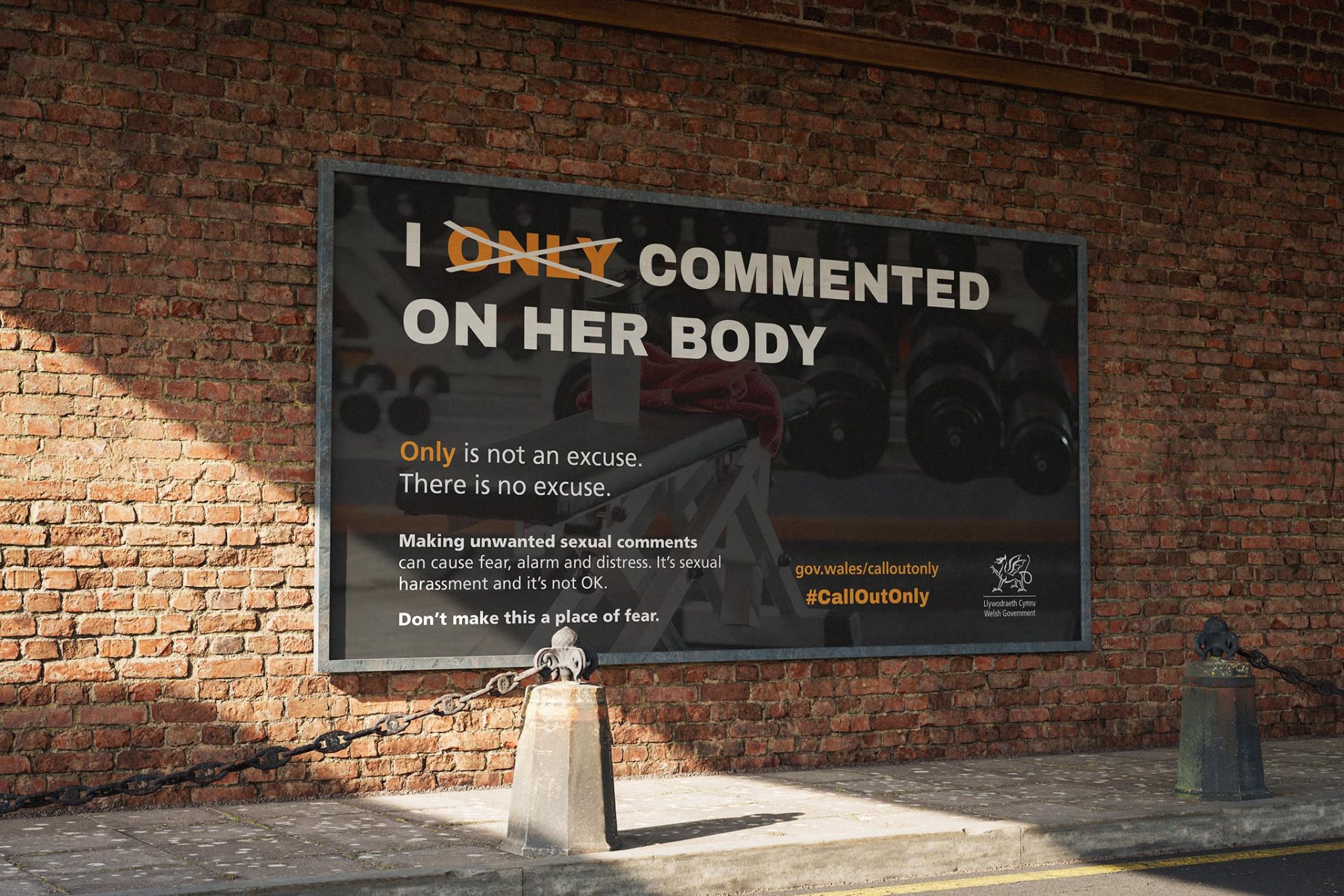
The Welsh Government has run various awareness-raising campaigns under its Live Fear Free banner. As an agency, we worked on a number of these including its Call Out Only campaign, where we drew attention to the everyday trivialisation of unwanted behaviours towards women and girls with straplines such as “I only wolf whistled at her”; “I only commented on her body” and “I only pressed against her” with the tag line “Only is not an excuse. There is no excuse”.
The Welsh Parliament’s Equality and Social Justice Committee published a report in 2024 on how we must all play our part in “halting the epidemic in gender-based violence”.
Interestingly, it notes the role sport plays in powerfully influencing social norms and culture and calls on the Welsh Government to consider funding a nation-wide campaign, featuring a top male sporting role model, to inspire other men and boys to take a stand against violence and promote positive values and behaviours.
And this gets to the heart of the issue. Good Good and Callaway are hugely influential brands. Good Good, in particular, has built a vast following among younger golf fans. So it’s disappointing that this power wasn’t actually used as a force for good.
Talkability is important and adverts are designed to be memorable, even provocative on occasions. But violence against women isn’t funny. And creating ad-led content that turns it into some sort of ‘joke’ risks both trivialising and normalising it.
This column appeared in the Western Mail on 7 September 2026 and was written by our Director, Carolyn Pugsley.